Questions to Ask a Custom Home Builder Before You Sign
Before signing, verify who you would hire, what is included, which site and budget assumptions remain open, how changes and decisions are documented, and what happens at handover. Ask every builder the same core questions and compare the written evidence, not only the presentation or headline price.

The most useful questions do more than invite a polished answer. They help you verify the legal entity you would hire and understand who is responsible for each part of the project. They also show whether proposals are comparable and how the team handles changes to the site, design, budget, or schedule.
Before you sign, ask every builder the same core questions and request the supporting information in writing. You are not looking for identical answers. You are looking for clear answers you can compare and a project structure you understand.
Start with a one-page project brief
Builder interviews are more useful when every team is responding to the same starting point. Prepare a short brief with:
The parcel address or the areas where you are considering land.
The approximate spaces and square footage you need.
Your target budget and what you expect it to include.
The design qualities you do not want to compromise.
Your desired move-in window.
Known HOA or private-design requirements.
Any major site questions, such as hillside conditions, drainage, utilities, access, or septic.
Mark what is confirmed and what is still an assumption. A brief alone cannot support a responsible final price or schedule. It can give each team the same basis for explaining its process, scope, and next steps.
1. What exact legal entity would be named in my contract?
Ask for the legal business name, Arizona Registrar of Contractors license number, and the license classification that would cover the proposed work. Then verify the record yourself rather than relying on a logo, website footer, or salesperson's statement.
The Arizona Registrar of Contractors recommends checking the contractor's license record and confirming that the classification permits the contracted work. It also recommends verifying that the person negotiating with you is authorized to represent the licensed contractor. If the proposal, payment instructions, license record, and brand use different names, ask for a written explanation before proceeding.
Also request current insurance information. Arizona ROC notes that a contractor license and bond do not, by themselves, establish that every form of insurance a homeowner may expect is in place.
2. Which completed projects are genuinely comparable to mine?
Do not stop at “Have you built custom homes before?” Ask for two or three projects that are similar in the ways that matter to your home:
Jurisdiction and approval path.
Site or grading complexity.
Architectural scope and level of customization.
Size and construction type.
Finish level.
Private design review or HOA requirements.
For each example, ask what the builder's team actually performed. A beautiful portfolio image does not tell you whether the firm designed the home, provided preconstruction services, built it, furnished it, joined midway, or photographed someone else's completed work. Relevant experience becomes useful when the role and constraints are clear.
3. Who will be responsible for design, engineering, permitting, interiors, and construction?
Ask the team to draw the responsibility map. Name the legal entities and the people expected to lead architecture, engineering, estimating, permitting, interiors, construction management, and field decisions.
Then ask which relationships are included in your agreement and which require separate contracts. “Full service,” “integrated,” and “design-build” can describe different arrangements. The agreements and scopes determine who owes what to the owner.
If you are still deciding between one design-build agreement and separate architect and contractor agreements, use Minima's design-build versus architect and general contractor guide before comparing firms. Keep that delivery-model decision separate from the broader question of whether a specific builder's proposal is complete and clear.
4. What has been confirmed about my site, and what is still assumed?
Ask which early conclusions come from records, consultant work, a site visit, or experience. Then identify which conclusions are still preliminary assumptions. Depending on the parcel, the project may need to address jurisdiction, zoning, setbacks, drainage or floodplain conditions, grading or hillside requirements, access, utilities, septic, easements, and private design review.
For every unresolved condition, ask:
Who will investigate it.
What information or consultant is needed.
When the investigation occurs.
Whether its cost is included.
How the result could affect design, price, or schedule.
A useful answer does not pretend uncertainty has disappeared. It shows how the team will reduce it.
5. What is included and excluded from the proposed scope?
Ask for a written scope that is detailed enough to compare with another proposal. It should distinguish included work, owner-provided items, allowances, alternates, exclusions, and items that cannot yet be priced.
Depending on the project, the comparison may need to cover:
Architecture, structural, civil, landscape, and interior design.
Survey, geotechnical work, drainage analysis, and other site investigations.
Preconstruction and estimating.
Permit coordination, agency responses, permit fees, and private review.
Grading, utilities, pools, landscape, walls, drives, and other site improvements.
Fixtures, appliances, cabinetry, lighting, and finish selections.
Contractor fee, overhead, insurance, and bonds when applicable.
Construction-phase design services, inspections, punch work, and closeout.
Before comparing totals, normalize the proposals so that each one accounts for the same design, site, construction, and closeout responsibilities.
6. How will the budget develop as the design becomes more specific?
Ask when you will receive pricing updates, what documents and selections support each update, and how the team distinguishes an early planning range from a construction price.
Useful follow-up questions include:
Which design milestones trigger a new estimate?
Does the estimate include the whole project or only the builder's current scope?
Are trade-partner quotes, historical costs, unit costs, allowances, or a combination being used?
How long are quoted prices expected to remain valid?
Which material selections or site conditions could materially change the number?
What happens if the design and the target budget diverge?
No delivery model eliminates early uncertainty. The question is whether the team exposes assumptions and updates the owner before decisions become expensive to reverse.
7. How are allowances, contingencies, escalation, and alternates handled?
These terms can make two similar-looking estimates behave very differently.
Ask what each allowance covers, the quantity and quality level assumed, and whether taxes, delivery, installation, contractor markup, and related labor are included. Ask who controls the contingency, what it may be used for, and what happens to unused funds. Ask whether escalation is already included, carried as an allowance, or treated later as a change.
If a proposal offers alternates, confirm whether they replace a base item or add to it. The goal is not to eliminate every allowance on day one. It is to understand what the current number assumes.
8. What is the written process for changes?
Changes may come from the owner, site discoveries, design coordination, agency comments, or product availability. Ask how the team documents the reason, scope, price, schedule effect, and authorization for each change.
The Arizona Registrar of Contractors advises owners to understand how a change order affects total cost and completion time. It also says the change order should be signed by both parties.
Ask whether work can proceed before a change is signed, who has authority to approve it, how credits are calculated, and where the current contract value is tracked. A conversation is not a change-management system.
9. Who handles permits, fees, HOA approvals, and agency responses?
Do not assume that “we handle permitting” answers every responsibility question. Ask who prepares each submittal, who signs it, who pays the fees, who responds to comments, and which owner decisions or third-party reports are dependencies.
Arizona ROC advises putting responsibility for permits and relevant terms into the written estimate and contract. It also notes that owners may have separate responsibilities involving HOA restrictions and construction policies.
Ask for a jurisdiction-specific path rather than a generic Arizona timeline. A parcel in an incorporated city follows that municipality; an unincorporated parcel begins with the county. Private review can exist alongside public approvals.
10. What is the schedule based on?
Ask for the major phases, dependencies, decision deadlines, and the assumptions behind the proposed duration. The schedule should distinguish design, investigations, private review, permitting, preconstruction, procurement, construction, inspections, and closeout.
Then ask:
Which dates are targets and which are commitments under the proposed agreement?
What owner selections must occur before each milestone?
Which items have long procurement lead times?
How are weather, agency review, redesign, unavailable products, and owner changes handled?
How often is the schedule updated, and who receives it?
Compare the explanation with Minima's published design-build process and phase overview, but rely on the project-specific agreement and schedule for your home.
11. Who will communicate with me, how often, and in what format?
Ask who is responsible for day-to-day communication during design and construction, who covers when that person is unavailable, and how urgent decisions are escalated.
Request a sample of the reporting format with private information removed. A useful update might show current decisions, upcoming selections, schedule changes, budget changes, field progress, open questions, and responsible parties.
Also ask where approvals are recorded. Email, project software, meeting minutes, and signed documents can all work when the team uses them consistently and the owner can find the current record.
12. Who supervises the site and manages trade partners?
Ask who will be on site, how often, and what authority that person has. Clarify the roles of the project manager, superintendent, design team, trade partners, and any third-party inspectors.
Ask how the builder prequalifies trade partners, coordinates work between trades, handles substitutions, and documents concealed conditions before walls are closed. The answer should describe a repeatable process, not only long-standing relationships.
13. How is quality checked before problems become closeout items?
Ask what inspections and internal quality checks occur at major stages, who documents them, and how corrections are tracked. Public inspections determine code-related approvals; they are not necessarily a complete review of every finish, selection, alignment, or contractual quality expectation.
Clarify whether the owner may engage independent consultants or inspectors, how site access is managed, and how their observations enter the project's correction process. The agreement should define the procedure rather than leave it to a disagreement during construction.
14. What happens at handover and after move-in?
Ask what must be complete before handover, how punch items are documented, and what closeout information the owner receives. Depending on the project, that may include approvals, warranties, manuals, finish records, care information, keys, controls, and a list of responsible contacts.
For the builder's warranty or post-completion service, ask:
What is covered and excluded.
When each coverage period begins and ends.
How a request is submitted.
Expected response and correction procedures.
Whether responsibility differs for builder work, manufacturer warranties, and owner-provided items.
Request the actual written warranty language before signing, not only a verbal summary.
15. May I speak with recent clients, and what should I ask them?
Request references from projects that resemble yours and, when practical and appropriate, ask whether a completed home or active site can be visited with permission.
Ask former clients about the parts of the experience that are difficult to see in photographs:
Did the proposal make the major exclusions and assumptions clear?
Were budget and schedule changes explained promptly?
Did the project team remain consistent?
Were owner decisions organized and documented?
How did the team handle a disagreement or unexpected condition?
Was punch and warranty work completed through a clear process?
What would the client ask earlier if building again?
One enthusiastic reference is not a complete sample. Look for consistent explanations across several relevant projects.
Use the same comparison sheet for every builder
Avoid choosing from memory after several polished meetings. Build a comparison sheet and record the evidence each team provides.
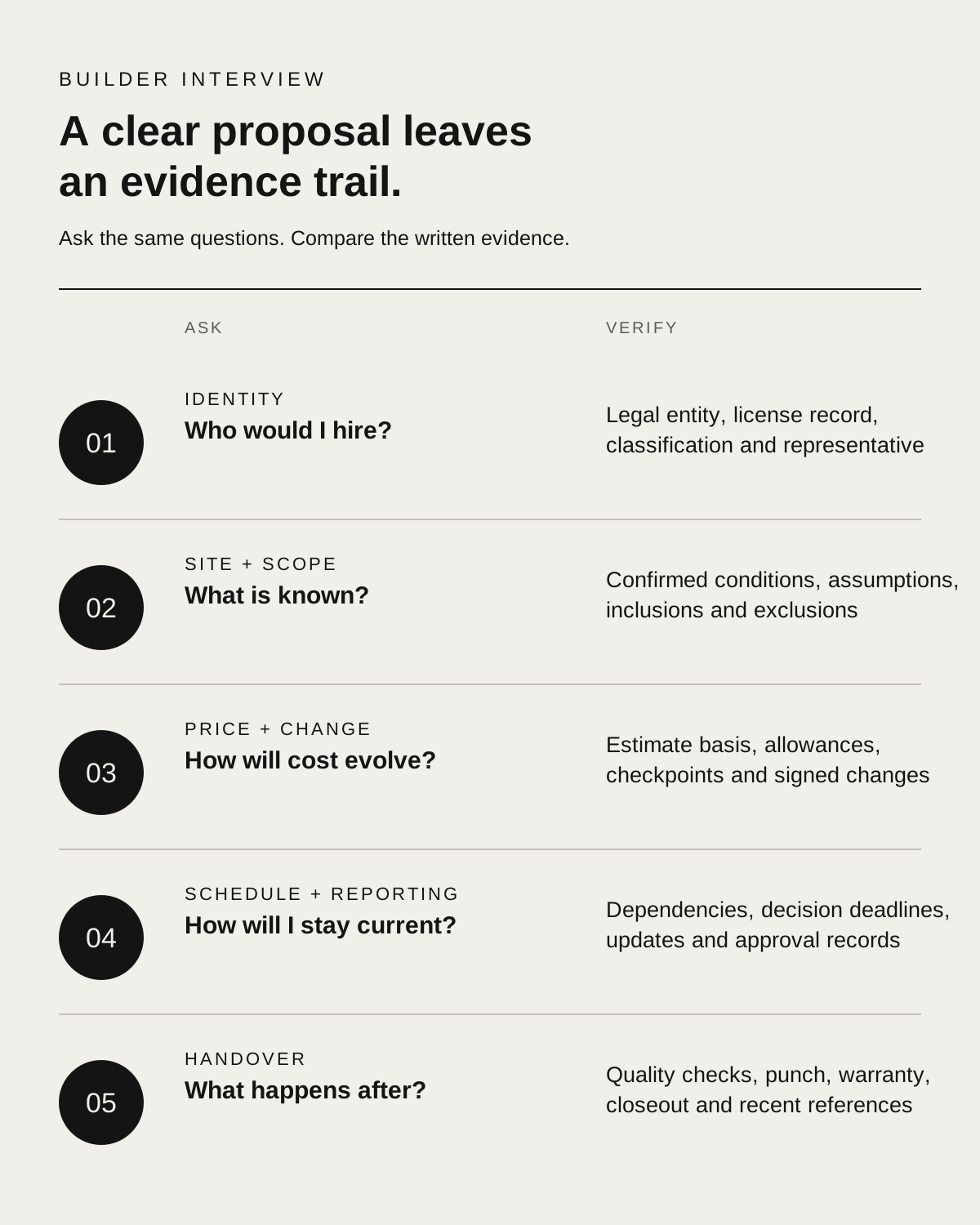
The sheet is not a substitute for professional review of the agreements. It is a way to identify missing information before you compare price or make a commitment.
Turn each answer into evidence
| Criterion | Ask the builder | Request or verify |
|---|---|---|
| Contracting identity | Which exact legal entity and license classification would cover the work? | Current ROC record, classification, contract name, payment name, and authorized representative. |
| Relevant work | Which completed projects are comparable, and what did your team actually do? | Relevant examples, the firm’s documented role, and recent reference contacts. |
| Site and scope | What is confirmed, assumed, included, excluded, or owner-provided? | Responsibility map, investigation list, written inclusions, exclusions, allowances, and dependencies. |
| Price and changes | How will the estimate develop, and how are changes approved? | Estimate basis, pricing checkpoints, allowance detail, escalation terms, and signed change process. |
| Schedule and communication | Which dependencies and owner decisions drive the schedule, and how will I stay current? | Project schedule, decision deadlines, sample report, update cadence, and approval record. |
| Quality and closeout | How are quality, punch, warranty, and post-handover requests handled? | Quality-control process, closeout list, written warranty, service procedure, and references. |
Red flags worth slowing down for
The proposal names a different company from the license record or payment instructions, and the relationship is not explained.
The team cannot identify the licensed contractor, named project leaders, or the entities responsible for design and construction.
A confident price or completion date is presented without site, scope, selection, and approval assumptions.
Important inclusions remain verbal after you request them in writing.
Two proposals are called comparable even though one omits major design, site, permit, finish, or closeout work.
The payment request is inconsistent with the written contract, is payable to an unrelated person or entity, or gets materially ahead of documented work.
Changes can proceed without a written description of price, schedule effect, and authorization.
The schedule omits agency review, owner decisions, long-lead selections, or other obvious dependencies.
The portfolio is compelling, but the firm cannot explain its role or provide relevant references.
Questions about warranty, correction, or changing course are treated as a lack of trust rather than normal project diligence.
Bring this shortlist to every builder interview
- Verify the exact legal entity, current ROC record, classification, and authorized representative.
- Ask for comparable projects and clarify the builder’s actual role in each one.
- Separate confirmed site conditions from assumptions and assign every open investigation.
- Normalize inclusions, exclusions, allowances, alternates, fees, and owner-provided items.
- Record pricing checkpoints, estimate inputs, escalation treatment, and the written change process.
- Assign permit, HOA, agency-response, schedule, communication, and approval responsibilities.
- Ask how supervision, quality checks, punch, handover, warranty, and post-completion service work.
- Speak with several relevant recent clients and ask how the team handled a real change or disagreement.
The decision is clarity plus fit
The right builder is not simply the firm with the longest portfolio, lowest early number, or most confident presentation. It is the team whose relevant experience, responsibility map, written scope, pricing process, communication, and way of handling uncertainty fit the project and the owner's priorities.
Use the same brief and questions with every team. Verify what can be verified independently. Put assumptions and responsibilities in writing. Then compare the full project structure, not only the headline price.
If you are planning a custom home in the Phoenix or Scottsdale area, explore Minima's custom-home approach and bring these questions to the conversation.
Sources and scope
Arizona Registrar of Contractors: Before You Hire a Contractor
Arizona Registrar of Contractors: Contracts and Miscellaneous Information
This guide is general educational information, not legal, architectural, engineering, insurance, or contracting advice. Project requirements depend on the parcel, jurisdiction, proposed scope, participants, and agreements. Consult the relevant agencies and qualified professionals for your project.
